The True Cost of Ignoring Your Check Engine Light
Your check engine light comes on during the drive to work. The car still starts, accelerates and seems to be running normally, so it is tempting to ignore the warning and hope it disappears.
Unfortunately, that small light on your dashboard can be an early warning of a problem that becomes considerably more expensive if left unresolved.
Modern vehicles rely on sophisticated engine management systems that continually monitor sensors, fuel delivery, ignition, emissions and other components. When the system detects something outside its expected operating range, it may illuminate the check engine light and store a diagnostic trouble code.
That does not necessarily mean your engine is about to fail. However, it does mean your vehicle has detected something that deserves attention.
If you need engine warning light diagnosis Hornsby, arranging professional diagnostics early can help identify the actual cause before a relatively minor fault develops into poor performance, a breakdown or expensive secondary damage.
What Does the Check Engine Light Actually Mean?
The check engine light—sometimes called the engine management light—is connected to your vehicle's onboard diagnostic system.
Modern cars contain numerous sensors and electronic control systems. They monitor everything from the amount of oxygen in the exhaust to engine temperature, airflow and combustion performance.
When the vehicle's computer detects a reading or operating condition outside the expected parameters, it can store a fault code and illuminate the warning light.
One important point is that the light itself does not tell you exactly what needs replacing.
A diagnostic trouble code provides technicians with an important starting point, but it must be interpreted correctly. Several different faults can sometimes produce similar symptoms or related codes. Simply reading a code and replacing the component mentioned in it can therefore lead to unnecessary repairs.
Professional diagnosis involves finding why the fault code was triggered.
Common Causes of a Check Engine Light
There are many reasons your engine warning light might appear. Some can be relatively straightforward, while others require more detailed investigation.
1. Faulty Oxygen Sensor
Oxygen sensors monitor the oxygen content in your vehicle's exhaust gases and provide information that helps the engine management system regulate the air-fuel mixture.
A malfunctioning sensor may contribute to inefficient engine operation, increased fuel consumption or emissions-related problems.
Ignoring the fault may also place additional strain on other components.
2. Ignition System Problems
Spark plugs and ignition coils are responsible for creating the spark required for combustion in petrol engines.
When an ignition component starts failing, the engine may misfire.
You might notice rough idling, hesitation, reduced power or difficulty accelerating. A serious misfire can potentially allow unburnt fuel into the exhaust system, where it can cause additional problems.
3. Fuel Injection Problems
Modern fuel injection systems must deliver precise quantities of fuel at the correct time.
Dirty, restricted or malfunctioning injectors can affect the engine's ability to run efficiently. Symptoms may include rough running, reduced acceleration, increased fuel consumption or unusual exhaust emissions.
Fuel injection problems are another example of why accurate diagnosis matters. Similar symptoms can be caused by ignition, airflow, sensor or mechanical problems.
4. Airflow and Intake Sensor Faults
Your engine needs the correct balance of air and fuel.
Components such as mass airflow sensors and manifold pressure sensors help the engine management system calculate how much air is entering the engine.
Incorrect information from one of these sensors can affect performance, fuel economy and drivability.
However, the sensor itself is not always responsible. Wiring problems, air leaks or another underlying issue can sometimes create misleading readings.
5. Emissions System Problems
Your check engine light can also indicate a problem associated with the vehicle's emissions control system.
The catalytic converter, oxygen sensors and other emissions-related components work together to reduce harmful exhaust emissions.
Because these systems interact closely with engine management, identifying the actual source of the problem requires proper testing rather than assumptions.
6. Electrical and Wiring Faults
Modern vehicles depend heavily on electronics.
Damaged wiring, corroded connections, poor earths, voltage problems and failing connectors can all interfere with signals between sensors, control modules and other components.
Electrical faults can be particularly difficult to diagnose because they may be intermittent. Your warning light might appear one day, disappear the next and then return later.
The disappearance of the warning light does not necessarily mean the original problem has repaired itself.
The Real Cost of Delaying Engine Warning Light Diagnosis
One of the biggest mistakes drivers make is judging a vehicle problem solely by how the car currently feels.
If it still drives, how serious could the problem be?
The problem is that automotive faults can have a knock-on effect.
A relatively inexpensive problem may begin affecting other components when it is allowed to continue.
Minor Problems Can Become Major Repairs
Consider an engine that is misfiring because of an ignition problem.
Continuing to drive with a severe misfire may allow unburnt fuel to enter the exhaust. Instead of dealing only with the original ignition fault, you could potentially end up with additional exhaust or emissions-system damage.
Early diagnosis is therefore not simply about switching off a warning light. It is about preventing one fault from creating another.
Fuel Costs Can Increase
Some engine management faults affect the vehicle's ability to control the air-fuel mixture accurately.
The engine may compensate for incorrect sensor information by using more fuel than necessary.
The difference might initially seem small. But when the vehicle is driven every day for weeks or months, the additional fuel expense can add up.
Resolving the underlying fault can therefore potentially save money beyond the repair itself.
Performance Can Gradually Deteriorate
Not every engine problem causes an immediate breakdown.
Some develop gradually.
You may become accustomed to slightly slower acceleration, rougher idling or poorer fuel economy without realising how much the vehicle's performance has changed.
Eventually, the fault may reach the point where the car enters a reduced-power or "limp" mode designed to protect critical systems.
You Increase the Risk of a Breakdown
Warning lights are called warning lights for a reason.
While some faults allow continued driving for a period, others can deteriorate unexpectedly.
Ignoring warning signs increases the possibility that the problem will become serious at an inconvenient time—during the commute, on a family trip or when you are far from your usual workshop.
The resulting towing, disruption and potentially more extensive repair can cost considerably more than arranging diagnostics when the warning first appeared.
Steady vs Flashing Check Engine Light
How the check engine light behaves can provide an indication of urgency.
A steady check engine light generally means the vehicle has detected a fault that needs investigation. The vehicle may continue to operate, but you should arrange a professional diagnosis rather than ignoring it.
A flashing check engine light should be treated more seriously. It can indicate an active problem such as a significant misfire that could cause further damage.
If the warning is flashing or the vehicle is running badly, losing power, overheating, producing unusual noises or displaying additional critical warnings, continuing to drive may not be appropriate. Stop somewhere safe and seek professional advice.
Your owner's manual should also explain the specific warning lights and recommended actions for your vehicle.
Why Reading the Fault Code Isn't Enough
Affordable code readers have made it easy for drivers to retrieve diagnostic trouble codes themselves.
That can be useful—but reading a code is not the same as diagnosing the vehicle.
Suppose a scan reports a fault associated with a particular sensor. The sensor could be defective, but the real cause might instead involve damaged wiring, a poor electrical connection, an air leak, incorrect voltage or another component affecting the sensor's readings.
Replacing the sensor without testing the system could leave you with exactly the same warning light—and a bill for a component you did not need.
That is why professional engine warning light diagnosis in Hornsby is about considerably more than connecting a scanner.
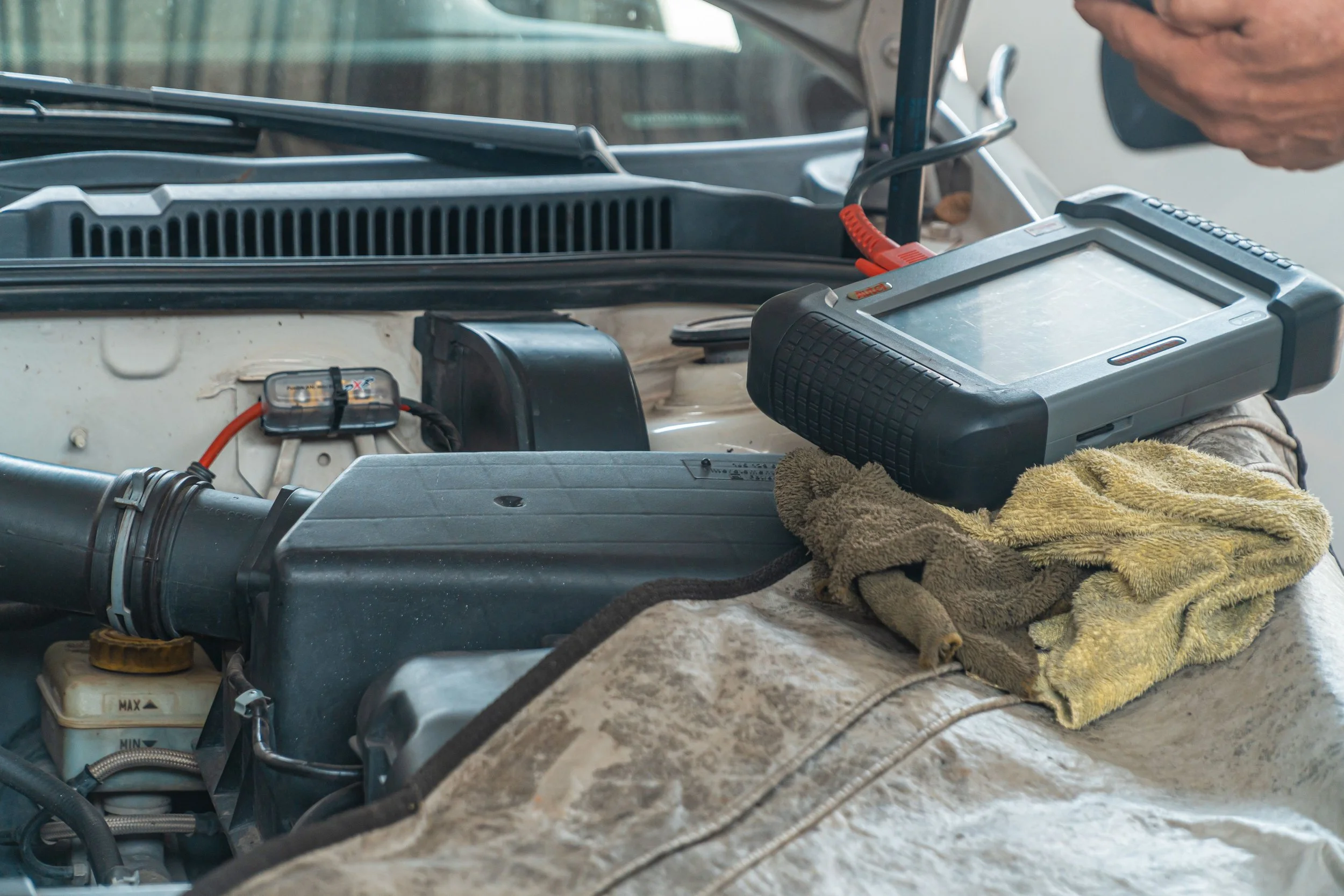
The diagnostic process may involve analysing fault codes and live vehicle data, testing electrical circuits, checking sensor operation, inspecting wiring and connectors and comparing results against expected operating values.
The objective is to identify the root cause before recommending repairs.
Why Professional Diagnostics Can Save You Money
It might seem cheaper to search the fault code online and replace the most commonly suggested component.
Sometimes you might get lucky.
But modern vehicles are complex, interconnected systems. Guessing becomes expensive when the first replacement does not solve the problem—or when the second and third do not either.
Professional diagnosis helps answer three essential questions:
What is actually wrong?
What caused the fault?
What needs to be repaired to solve it properly?
Accurate answers can prevent unnecessary parts replacement while reducing the likelihood of the same problem returning.
That is particularly important with intermittent electrical and electronic faults, where experience, diagnostic equipment and structured testing can make a significant difference.
Engine Warning Light Diagnosis in Hornsby
When your check engine light appears, you need more than someone who can simply clear the code.
You need technicians who can investigate why it appeared.
Barrie Automotive specialises in diagnostic and repair work, using current diagnostic technology and structured testing to locate faults at their source. Rather than relying on trial-and-error parts replacement, the focus is on identifying the actual problem and determining the appropriate repair.
Modern vehicles are effectively computers on wheels, which means accurate fault diagnosis requires both specialist equipment and technical knowledge.
Whether your warning light relates to an electrical issue, fuel injection problem, sensor fault, ignition system or another engine-management concern, getting the vehicle properly tested can help you make an informed decision about the next step.
Don't Wait for a Warning Light to Become a Repair Bill
Ignoring a check engine light can feel like saving money because you are postponing a workshop visit.
In reality, you may simply be postponing the expense while allowing the underlying problem to become worse.
A warning that starts with a sensor, ignition or fuel-system problem can potentially lead to poor fuel economy, reduced performance, secondary component damage or an unexpected breakdown.
Early diagnosis gives you the opportunity to understand the problem while it may still be relatively straightforward to resolve.
If your check engine light has appeared and you need reliable engine warning light diagnosis Hornsby, contact Barrie Automotive. With decades of diagnostic experience and modern testing equipment, the team focuses on identifying the root cause of vehicle faults and repairing them correctly.
Don't wait for a dashboard warning to turn into a roadside breakdown.